History and purpose of watches
Origins of timekeeping
Time measurement began with sundials and water clocks. The sun and moving water showed the hours.
Over time, timekeepers became portable. guide-to-understanding-humans-in-modern-life/”>People used small clocks and pocket watches.
Mechanical ideas joined gears, springs, and levers. These parts made clocks more precise. They laid the groundwork for modern watches.
Accurate timekeeping changed daily life and navigation worldwide. People could schedule trains, boats, and work more easily. Mariners used precise clocks to find longitude. This change helped global travel and trade.
The birth and rise of the wristwatch
The wristwatch began in the early 1900s. It grew because people tested its usefulness in war and flight.
Wristwatches gained popularity with soldiers and pilots in the 20th century. They wore them on their wrists in the field and in the air.
People used pocket watches in the 19th century. Designers added straps to wear watches on the wrist. These changes made wristwatches easy to wear.
Over time, people chose wristwatches for style, not just use. Wristwatches became a fashion item. People used them to show wealth and status.
Milestones in watchmaking
The balance spring, or hairspring, was a big milestone in watchmaking. It made watches more reliable and kept time better. Automatic winding lets a watch wind itself as you move. This feature made watches easier to use and more dependable.
Quartz technology changed timekeeping. Quartz watches use a tiny crystal to keep time. They are extremely accurate and inexpensive to run. Later, smart features appeared, adding notifications and other functions. These changes revolutionized accuracy and functionality for many people.
New materials and complications expanded durability and versatility. New materials, like tougher metals and strong plastics, made watches stronger and lighter. Modern watches use silicon parts and hard crystals for extra toughness. Complications are extra features such as calendars and moon phases that add many uses. Together, these advances make watches durable and versatile for daily life.
Types of watches
Analog watches
Traditional dial-based displays use hands to indicate hours, minutes, and seconds.
Aesthetic choices include indices, complications, and case design.
Analog watches remain popular for elegance and readability.
Digital watches
Digital watches show the time in numbers. They often include extra features like a stopwatch or alarm. The screen makes the numbers easy to read.
The design stays simple. Its display is easy to read. This helps when you move or play sports. People wear them for sports and daily use.
Digital technology helps make the watches durable. They need little care. The designs are built for low maintenance and long life.
Mechanical vs quartz movements
Mechanical movements rely on springs and gears. People value their craftsmanship.
Quartz movements use electronic oscillators. They offer high accuracy and low maintenance.
The choice depends on your personality. It also depends on your budget and love of engineering.
Smartwatches and modern functionality
Smartwatches add connectivity, health tracking, and apps to the wrist. They act as small computers you wear every day. They help you stay in touch, check health data, and use apps on the go.
Battery life, ecosystems, and compatibility influence value. Long battery life means fewer charges. A watch that works well with your phone is more useful. People pick models by how well they fit their other devices.
Designs range from sport-focused to luxury-inspired wearables. Some models suit workouts with rugged bands. Other models look fancy and use premium materials. You can pick a design that fits your style.
How to choose a watch
Define purpose and lifestyle
Define purpose and lifestyle. It helps you choose items that fit your life. Your days show your needs. Think about work, school, and play.
Formal events, sports, or daily wear require different features and aesthetics. Different activities need different looks. Choose items that match where you will wear them.
Water resistance, durability, and strap options should match activities. If you swim or sweat a lot, seek water resistance. Durability helps items last through your moves. Straps should fit your activity and comfort.
Consider future needs to avoid buyer’s remorse. Think about changes in your life, like a new hobby or job. Plan ahead so you can keep using the item.
Movement, accuracy, and servicing
Movement type affects accuracy, cost, and maintenance frequency. Quartz watches are usually accurate and cheap. Mechanical and automatic watches cost more. They often need more upkeep. Automatic watches wind themselves when you wear them.
Servicing intervals differ by movement and brand. Some watches need service every 3 to 5 years. Other models may need longer gaps. Brands set their own schedules. Read the manual or ask a dealer to be sure.
Think about resale value and long-term reliability. A good service history helps resale value. Reliable movements last longer with proper care. Choose a movement that fits how you plan to use the watch. Careful maintenance saves money over time.
Sizing, fit, and comfort
The case diameter and the lug-to-lug distance affect how well a watch fits your wrist. A large case can feel heavy. A long lug-to-lug distance can poke your arm. A shorter distance helps it sit flat and comfortable.
Strap material and buckle adjustability affect comfort and style. Leather, rubber, and metal straps feel different. Check how easy it is to tighten or loosen the strap. Choose a material that feels good and a buckle that fits your wrist.
Trying it on is essential to ensure a comfortable, balanced look. Put the watch on your wrist and move your arm. Check that it sits evenly and does not pinch or rub.
Material, finish, water resistance, and durability
Case materials determine weight, scratch resistance, and price. Heavier cases feel sturdy. Lighter cases save weight. Metal cases are often more expensive. Plastic cases cost less.
Finish and bezel design influence legibility and style. A matte finish reduces glare. A clear dial helps you read the time. The bezel adds function and looks. Some bezels show numbers and marks.
Water resistance should align with actual usage. If you swim, choose a watch with a higher rating. If you dive, pick a model built for diving. Some watches resist rain and hand washing. Always read the water rating before you use it in water.
Budget, value, and where to buy
Set a realistic budget. Decide what you can spend now and later. A budget helps you see long-term value and maintenance costs. Think about repairs, parts, and routine care over time. Pick a price that fits your needs and upkeep.
Buy from authorized retailers, official boutiques, or trusted marketplaces. These sources sell genuine products and usually offer a valid warranty. They reduce the risk of fake items. Always check return policies and warranty terms before you buy.
Think about resale value when you pick a price tier. A higher price may keep value longer, but it costs more now. A lower price saves cash, but may lose value later. A mid-range option balances cost and future value. Read reviews to see how well the item lasts.
Care, maintenance, and care routines
Daily care and cleaning
Regular cleaning keeps cases and crystals looking new.
Avoid exposure to magnets, solvents, and extreme temperatures.
Wipe with a soft cloth after wear to prevent tarnish.
Servicing and longevity
Most mechanical watches need servicing every 3-5 years depending on use and brand.
Quartz watches need servicing less often, but changing the battery matters.
Certified watchmakers give the best timing accuracy.
Storage and travel care
Store in a cool, dry place away from strong magnets.
Use watch winders for automatic movements if not worn daily.
Travel pouches protect against shocks and scratches.
Straps care and replacement
Leather straps need conditioning. They wear faster when they get water on them. Condition the leather to keep it soft. Dry them after water exposure. Store them away from heat.
Metal bracelets require periodic cleaning. Check pins and links often. Clean them with a soft brush and mild soap. Look for loose pins and links. Fix loose parts when you see them.
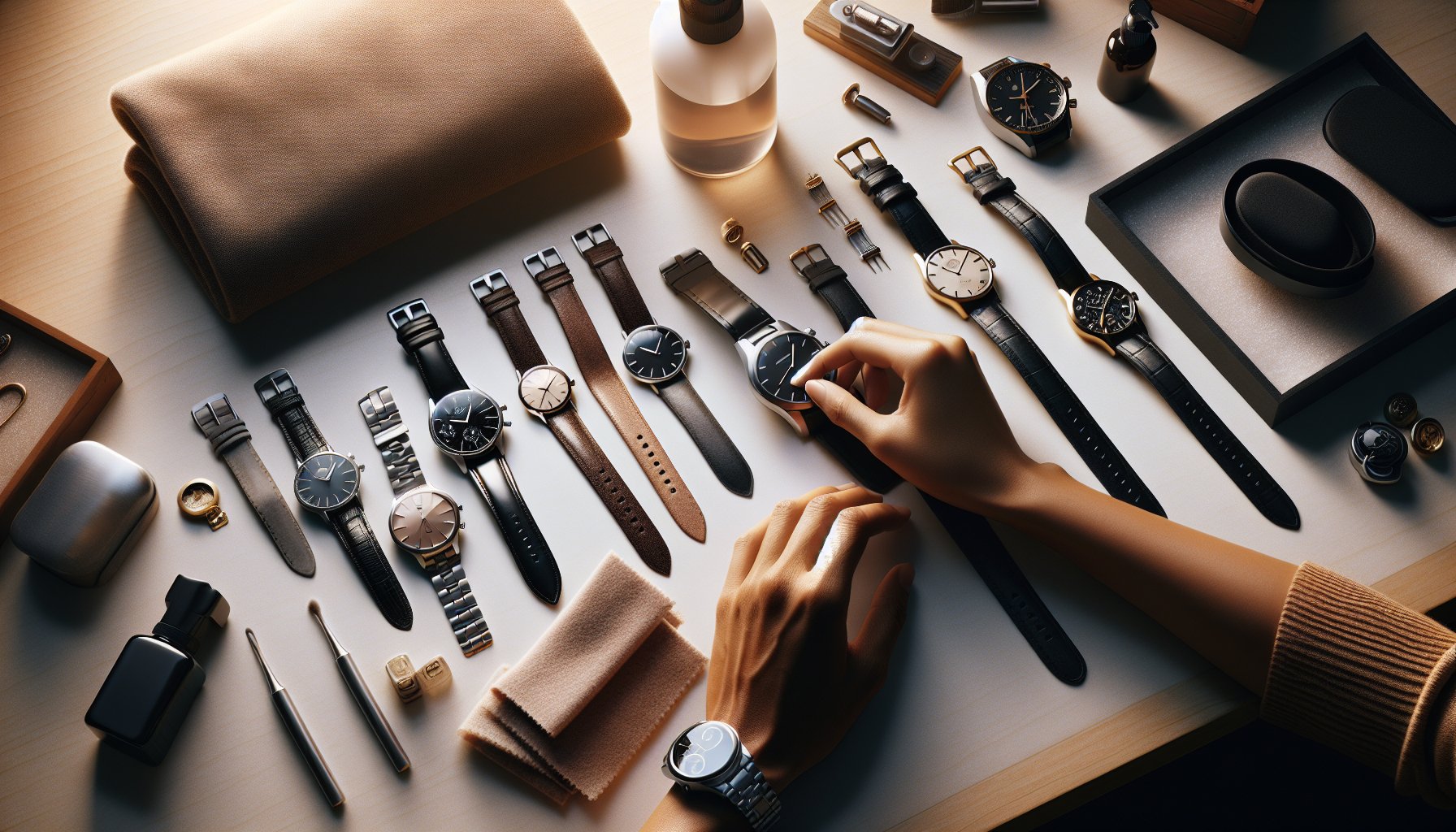
Strap changes can refresh the look without a new watch. You can swap straps for a new style. Choose the right size. Change the strap with a simple tool. A new strap can save money over buying a new watch.
Buying guide and trends
Where to buy and choosing a seller
Buy from authorized dealers. They provide warranties and authenticity support.
Choose reputable online marketplaces. They require careful verification of provenance. Provenance means where the item came from. Look for clear seller details, receipts, and product history. Verify dates, brands, and ownership before you buy.
In-person visits help you assess condition and fit. See the item up close before you buy. Check for damage, wear, and size or fit. Ask questions, test features, and compare with photos.
Authentication and avoiding counterfeits
Authentication helps you buy real items. It protects you from fake products. It can take time, but it is worth it. You can learn to spot fake items.
Check serial numbers, movement, and packaging details. Ask to see the serial number and model. Compare it to the number on the box and the manual. Look at the movement if the item has one. Examine the packaging for correct labeling and seals.
Compare specs with official product pages and trusted reviews. Go to the official site for the exact specs. Check the model number, size, and features. Read reviews from trusted sources. If there are big gaps, the item may be fake.
If a deal seems too good to be true, it probably is. Very low prices can hide problems. Ask the seller for proof, receipts, and clear photos. If you feel unsure, walk away. Buy only from trusted sellers.
New vs pre-owned: pros and cons
New and pre-owned watches have pros and cons. This guide explains the main ideas.
Pre-owned offers value and potential vintage appeal. They are often cheaper than new watches. They can have a classic look.
New watches come with full warranties and latest refinements. This helps you feel safe when you buy new. New models have the newest tech.
Inspect for wear, service history, and authenticity when buying pre-owned. Look for scratches or dents. Ask for service records. Check the model and serial numbers to confirm authenticity.
Price tiers and value picks
Entry-level watches offer solid reliability and style for beginners.
Mid-range selections balance quality, brand prestige, and durability.
High-end watches emphasize craftsmanship and investment potential.
Brands, trends, and collecting
Iconic brands and signature models
Some brands define eras with recognizable silhouettes and complications. A silhouette shows the watch’s overall shape. Complications offer extra features that go beyond showing time.
Signature models help anchor a collection and convey style. They show what a brand wants to be known for.
Brand history adds context and appreciation for craftsmanship. Knowing the story helps buyers see value and skill in each piece.
Current design and tech trends
Slim profiles, integrated bracelets, and ceramic materials are popular.
smartwatch features continue to evolve with a focus on health and sustainability.
Limited editions and collaborations drive desirability among collectors.
Collecting and investment considerations
People collect what they like. Condition matters to collectors. Provenance, or where it came from, matters too.
Market values shift over time. The upside in the long term depends on rarity and storytelling. Rarity and a good story can raise prices.
Store items properly to protect them. Keep a documented service history. This history protects value.
Careers and education in watchmaking
Learning watchmaking opens paths in restoration, design, and appraisal.
Many brands support apprenticeships and community education.
Online resources and watch forums help enthusiasts grow their knowledge.
Leave a Reply