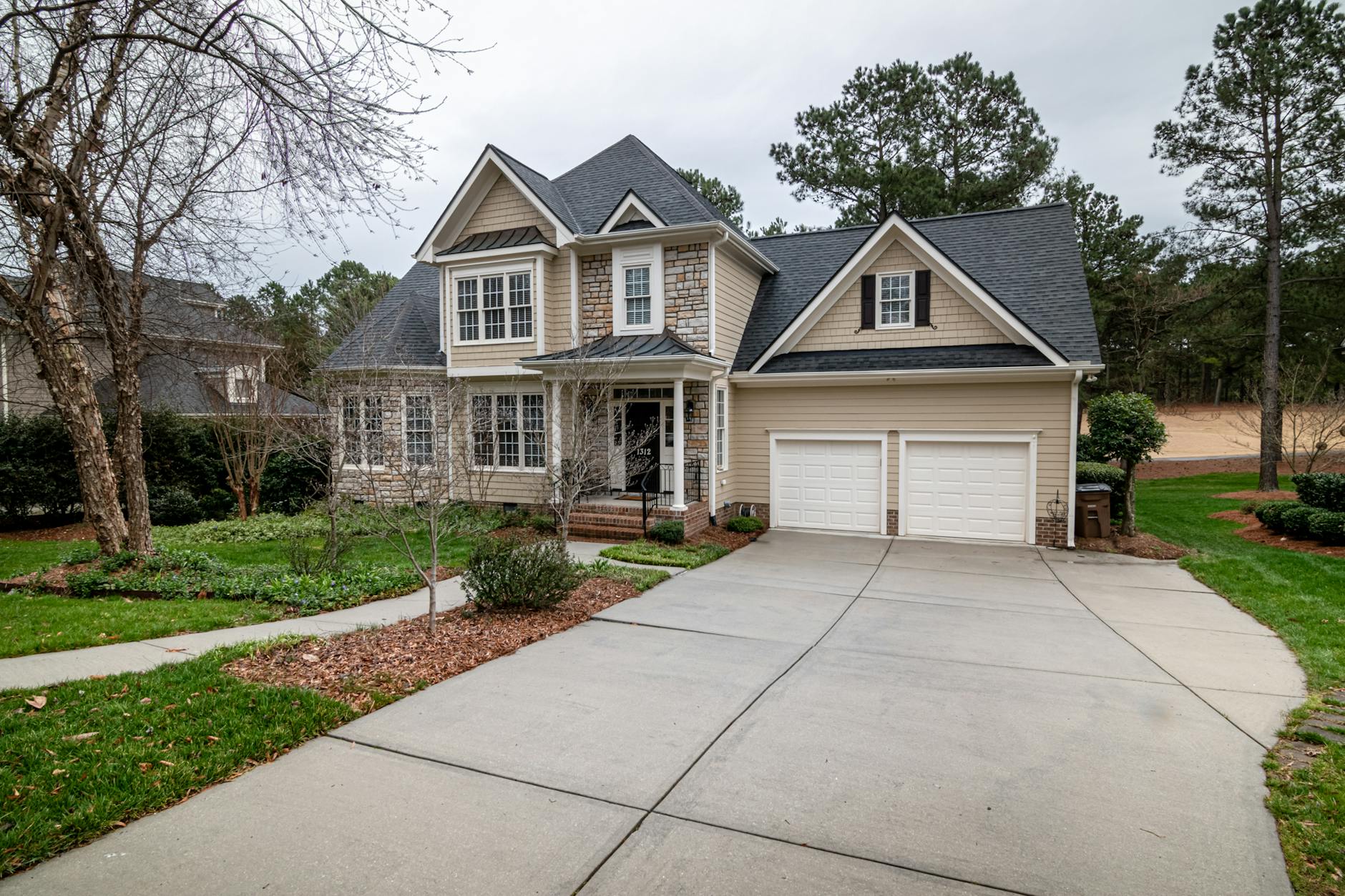
What is a Mortgage?
Definition and purpose
What a mortgage is and why it matters
- A mortgage is a loan secured by real estate that lets you buy a home without paying the full price upfront.
- The loan is repaid with interest over a fixed term—typically 15, 20, or 30 years.
- The property serves as collateral, giving the lender the right to take possession if payments are missed.
Purpose: A mortgage makes home ownership possible by spreading payments over time, with the property serving as security for the lender.
Who uses mortgages (homebuyers, investors)
Mortgages shape who buys homes, who invests, and how housing markets change. Here’s who uses them and why it matters for housing trends:
- Most first-time and repeat homebuyers rely on mortgages to finance a purchase, making homeownership possible when cash on hand isn’t enough.
- Real estate investors use mortgages to leverage larger properties and boost returns. Financing part of a deal can grow a portfolio, improve cash flow, and support appreciation, where paying cash would be impractical.
- Borrower profiles influence loan options, down payments, and rates. Factors like credit scores, income stability, and whether the property will be owner-occupied or a rental affect loan types, required down payments, and interest rates.
How a mortgage differs from other loans
A mortgage isn’t just a bigger loan—it’s a long-term commitment backed by real estate. Here’s how it differs from other loans.
- Mortgages use real estate as collateral and typically involve larger loan amounts. The property you purchase serves as security, so these loans are generally bigger than many unsecured options like personal loans or credit cards.
- They typically have longer terms and stricter underwriting. Most mortgages run 15 to 30 years, and the underwriting process weighs income, employment stability, credit history, and debt-to-income ratio more than many shorter unsecured loans.
- Mortgages usually follow an amortizing payment schedule, can have fixed or adjustable rates, and may require escrow accounts to cover property taxes and homeowners insurance.
Why a Mortgage Matters
Enables home ownership
Ready to own a home? Mortgages turn that goal into reality by spreading the purchase price into manageable, regular payments.
- Mortgages make homeownership financially feasible by spreading the price over time. You borrow part of the purchase price and repay it in regular, smaller payments—often over many years—so the cost aligns with typical income and expands access to ownership.
- Mortgages let you build equity as you pay down the loan and as property values rise. Owning with a mortgage gives you a stake in the asset and the potential for long-term wealth growth.
- Without a mortgage, buying real estate usually requires a substantial cash reserve. Paying cash upfront is out of reach for many households, so a mortgage is a key path to homeownership.
Long-term financial commitment
Every mortgage choice today shapes your finances for years to come. Here’s a concise, practical guide to the numbers that actually matter:
- Mortgage terms shape monthly payments, total interest, and the overall cost of the home.
- Longer terms (like a 30-year loan) typically mean smaller monthly payments but higher total interest over the life of the loan.
- Shorter terms (like a 15-year loan) typically mean larger monthly payments but lower total interest, reducing overall cost.
- Down payment size, interest type, and other costs (such as private mortgage insurance) also affect total cost.
- Interest rates and payment schedules impact long-term planning.
- Fixed-rate loans keep payments consistent, helping you budget for the long term.
- Adjustable-rate or variable-rate loans can change with market rates, affecting future costs.
- Paying more often (biweekly) or making extra principal payments can shorten the loan term and reduce interest.
- Default risk affects credit, insurance, and future borrowing opportunities.
- Missed payments can lower your credit score, making loans more expensive or harder to obtain.
- Lower credit scores can raise insurance premiums and lead to tougher loan terms.
- A strong repayment history improves access to credit and better terms in the future.
Bottom line: compare loan terms, understand how interest and payment schedules affect costs, and protect your credit to maintain favorable insurance rates and borrowing options in the future.
Impact on credit and wealth-building
Your mortgage can power your credit score and long-term wealth—if you manage it right.
- Regular, on-time mortgage payments strengthen your credit history and raise your scores.
- Payments reported to credit bureaus demonstrate a track record of reliability.
- Consistent on-time payments over years can lift your credit score and improve your overall profile.
- Your equity grows as you pay down principal and as the home’s value appreciates, boosting your wealth.
- Equity increases when you reduce the loan balance and when the property appreciates.
- Building equity can provide future wealth through sale proceeds or by borrowing against your home equity.
- Poor payment habits or high debt levels can limit future borrowing options.
- Late payments or defaults can lower credit scores and make loans harder to obtain.
- A high debt-to-income ratio can lead to higher interest costs or fewer loan options.
Bottom line: responsible mortgage management supports credit health and long-term wealth, while missteps can limit future borrowing opportunities.
Key Components of a Mortgage
Principal and interest
When you borrow, two numbers matter most: principal and interest. Here’s a clear, concise breakdown:
- Principal is the loan amount; interest is the cost of borrowing.
- Monthly payments typically include both principal and interest, forming your monthly payment.
Taxes, Insurance, and Escrow (T&I)
Taxes, Insurance, and Escrow (T&I) handles your property taxes and homeowners insurance so you won’t have to scramble for bills each year. Here’s a clear, practical guide to how it works.
- Taxes and homeowners insurance are often collected monthly and held in escrow by the lender.
- Escrow helps ensure timely payment of property taxes and insurance.
- Each month, a portion of your total mortgage payment goes into the escrow account, and the lender uses those funds to pay the tax bill and insurance premiums when they come due.
- An escrow account helps with budgeting and helps prevent penalties from late payments or lapses in coverage.
- Not all loans require an escrow account. Some options let you pay taxes and insurance directly instead of through escrow.
Interest rates and amortization
Understand loan costs in plain terms: how interest affects your monthly payments and how amortization shapes the total you’ll pay over the life of the loan.
- The interest rate is the price of borrowing and directly affects your monthly payment.
- Amortization explains how each payment reduces the loan balance. Early on, most of your payment covers interest, so the principal decreases slowly; as time goes on, more of each payment goes toward paying down the balance.
- A shorter amortization period raises monthly payments but lowers the total interest you’ll pay.
Illustrative numbers (for a $200,000 loan at 5%):
- 30-year term: monthly payment ≈ $1,073.64; total interest ≈ $186,510.40; total paid ≈ $386,510.40.
- 15-year term: monthly payment ≈ $1,581.68; total interest ≈ $84,702.40; total paid ≈ $284,702.40.
Loan-to-value ratio (LTV) and down payment
When you’re buying a home, the loan-to-value ratio (LTV) can make or break your terms. Here’s what it means and how your down payment changes the game.
- LTV = loan amount divided by the property’s appraised value (or purchase price, if lower). A lower LTV typically yields better loan terms and easier approval.
- Putting down more cash lowers the LTV, can improve your odds of approval, and may reduce the amount of private mortgage insurance (PMI) you’ll pay.
Common Types of Mortgage
Fixed-rate mortgages vs adjustable-rate mortgages (ARMs)
Fixed-rate mortgages and adjustable-rate mortgages (ARMs) are two common ways to finance a home. Here’s a concise, no-nonsense comparison to help you decide.
| Type | How it works | Stability | Notes |
|---|---|---|---|
| Fixed-rate mortgage | Interest rate stays the same for the entire term (e.g., 15 or 30 years); the monthly payment remains constant unless you modify the loan. | Payment stays constant over the term | Good for budgeting and long-term planning; may start with a higher rate than ARMs. |
| Adjustable-rate mortgage (ARM) | Starts with a lower rate for an initial period, then the rate adjusts at set intervals based on a market index plus a margin. | Payments can change over time | Can be lower initially; risk of rising payments if rates go up. |
- Fixed-rate mortgages keep the same interest rate and monthly payment for the entire term.
- ARMs start with a lower fixed rate for an initial period, then adjust later based on market rates.
- Your choice depends on how long you plan to stay, your tolerance for risk, and expectations about future rates.
Government-backed programs (FHA, VA, USDA)
Government-backed home loan programs can fit a wide range of buyers. Here’s a straightforward look at FHA, VA, and USDA loans.
| Program | Who it’s for | Typical down payment | Key features |
|---|---|---|---|
| FHA | Borrowers with limited credit history or smaller down payments | As low as about 3.5% in many cases | Lower down payments and flexible credit requirements |
| VA | Eligible service members, veterans, and some spouses | Often no down payment | Favorable terms and no PMI in many cases |
| USDA | Borrowers in rural or underserved areas | Low or no down payment | Designed for rural areas; may have low mortgage insurance or fees |
- FHA loans offer smaller down payments and flexible credit guidelines.
- VA loans provide favorable terms for eligible service members and often require no down payment.
- USDA loans serve rural or underserved areas and commonly feature little or no down payment.
Conventional vs jumbo loans
Conventional vs jumbo loans: a clear, no-nonsense guide to how they work and what lenders check.
| Conventional loans | Jumbo loans |
| Conventional loans conform to agency guidelines set by Fannie Mae and Freddie Mac; they’re considered conforming when they stay within established loan-size limits. | Jumbo loans exceed conforming loan limits and don’t fit standard conforming programs. |
| Conventional loans may require private mortgage insurance (PMI) if your down payment is small (often below 20%). | Jumbo loans typically require larger down payments and have stricter credit and income requirements; overall tighter qualification standards. |
The Mortgage Process: Steps and Timelines
Pre-qualification vs pre-approval
Skip the jargon—here’s a straightforward breakdown of pre-qualification versus pre-approval, so you know what each step means and why it matters.
| Pre-qualification | A rough estimate of how much you might borrow, based on information you provide (often self-reported). |
| Pre-approval | A lender reviews your finances and issues a conditional commitment—usually in writing—to loan you a specific amount. |
Applying for a loan and required documents
Know exactly what lenders want—and what you should have on hand—so your loan application stands out.
- Proof of income, recent bank statements, tax returns, and details about debts and assets.
- Lenders may request additional information to evaluate your overall finances, such as your credit history and recent financial activity.
- For secured loans, like mortgages, you’ll also provide property details—address, property type, and the appraisal value.
A borrower’s financial history and property details help determine loan terms.
| Borrower’s financial history | A borrower’s past borrowing performance, credit score, income stability, and existing debts help lenders set interest rates, fees, and approval likelihood. |
| Property details | For secured loans, the property’s value, type, location, and appraisal influence the loan-to-value ratio and whether mortgage insurance or special terms apply. |
Underwriting, appraisal, and approval
Here’s a straightforward, three-step view of the mortgage process: underwriting, appraisal, and final approval. understanding-times-from-history-to-modern-applications/”>Understanding what each stage requires helps you move smoothly from application to funding.
- Underwriting determines eligibility and terms. The underwriter analyzes your credit, income, assets, debts, and loan details to decide if you qualify and what terms apply.
- Appraisal confirms value and condition. A licensed appraiser estimates the property’s worth and notes any condition issues to ensure the loan amount aligns with reality.
- Approval moves you to closing and funding. Once underwriting and appraisal are cleared, the lender issues final approval, and you can close and receive funds if all conditions are met.
Closing and funding
You’re almost at the finish line: closing and funding finalize your real estate deal. Here’s a clear, practical breakdown to help you navigate the last steps with confidence.
- Closing
- Signing final loan documents and paying closing costs.
- After signing, you complete the remaining paperwork and cover any necessary fees to close both the loan and the purchase.
- Funding
- Funding disburses the loan proceeds to the seller, and ownership transfers to you.
- Once funded, the title is recorded in your name and the mortgage lien is placed on the property (if applicable).
Affordability and Budgeting
How lenders calculate payment
How your mortgage payment is calculated
Your monthly payment reflects several factors. Here’s a clear, practical breakdown.
- It depends on the loan amount, the interest rate, the term, and any escrow for taxes and insurance.
- We periodically review payments to ensure they stay aligned with your budget.
Example (illustrative only):
| Loan amount (P) | $300,000 |
| Annual interest rate | 4.50% |
| Term | 30 years (360 payments) |
| Estimated monthly principal & interest | About $1,520 |
| Estimated escrow for taxes & insurance | About $200 |
| Estimated total monthly payment | About $1,720 |
| How it’s calculated | Monthly payment (P&I) ≈ P × r / [1 − (1 + r)^(-n)], where r is the monthly rate (annual rate ÷ 12) and n is the total number of payments. Escrow is added if taxes/insurance are included in the payment. |
Total housing costs and debt limits
Want to know how much house you can actually afford? Here’s a clear, fact-checked breakdown you can rely on to make informed decisions.
- Lenders evaluate two ratios: front-end (housing costs) and back-end (all monthly debts) to decide how much they’ll loan you.
- Front-end ratio (housing costs): includes the loan’s principal and interest, property taxes, and homeowners insurance—collectively called PITI. This housing portion divided by your gross monthly income is the front-end ratio.
- Back-end ratio (all monthly debts): includes payments on credit cards, student loans, car loans, and other recurring debts, divided by your gross monthly income.
- Why it matters: Higher ratios limit the loan amount because lenders want to ensure you can cover mortgage payments even if costs rise or income changes.
- Guideline: A common target is to keep housing costs below roughly 28-31% of gross income. This is a guideline, not a universal rule; limits vary by loan type, lender, credit history, down payment, and other factors.
- Practical example: With a gross monthly income of 5,000, housing costs of about 1,400 to 1,550 per month align with the guideline. Back-end limits depend on other debts: at 36% you could have up to 1,800 in total debt payments per month; at 43% up to about 2,150. Final approval depends on your full financial picture.
Tips to improve affordability and credit
Tips to improve affordability and credit
Getting a loan you can actually afford comes down to three steps: strengthen your credit, shrink debt, and save for a down payment. Use these practical steps to get there.
- Strengthen your credit, shrink debt, and build a bigger down payment
- Strengthen your credit: pay all bills on time, keep credit card balances low, and monitor your credit reports for errors—dispute inaccuracies with the bureaus.
- Shrink your debt: prioritize high‑interest accounts, make extra payments when you can, and avoid taking on new debt while saving for a down payment.
- Build a larger down payment: set a monthly savings target, automate transfers to a dedicated savings account, and cut nonessential spending.
- Shop around to compare loan offers and secure the best rate and terms
- Get quotes from several lenders and compare interest rates, APR, fees, and loan terms.
- Understand prequalification (soft credit pull) versus preapproval (hard pull) and how each affects your credit score and chances of approval.
- Look at the total cost of the loan, not just the monthly payment. Consider closing costs, points, and mortgage insurance (PMI or MIP).
- Ask about lender programs, discounts, and any caps on fees that could affect affordability.
- Explore loan programs that fit your situation and down payment capacity
- FHA loans can require as little as about 3.5% down for eligible borrowers, but include mortgage insurance costs.
- Conventional loans may allow down payments as low as 3%–5% with PMI until you reach around 20% equity.
- VA loans offer no down payment for eligible veterans or active service members, and generally do not require PMI, but may have a funding fee.
- USDA loans can offer no down payment in eligible rural or suburban areas, with income limits and certain fees.
- Down payment assistance programs and gift funds from family can help with upfront costs if your lender allows them.
Tip: Talk to a housing counselor or a trusted lender to understand which programs fit your finances and location. Aim for a monthly payment you can comfortably manage, paired with a realistic path to a larger down payment.
Choosing the Right Mortgage
Factors to compare (rates, fees, points)
Lock in the numbers that matter: how rates, fees, and points shape your loan.
- Interest rate: The base rate that determines your monthly payment. A lower rate typically reduces the payment, assuming other factors stay the same.
- APR (annual percentage rate): The yearly cost of the loan as a percentage, including the interest rate plus most lender fees and points. APR lets you compare loans on an apples-to-apples basis, but it doesn’t capture every cost (some taxes, insurance, or special fees may be separate).
- Points: Optional prepaid interest. One point equals 1% of the loan amount. Paying points can lower the interest rate and reduce monthly payments, but it increases upfront costs. The decision depends on how long you’ll keep the loan and how quickly you expect to recoup the upfront expense.
- Closing costs: Fees due at closing, such as appraisal, credit report, title insurance, and recording fees. Some items can be financed into the loan, others must be paid upfront. Compare not just the total but what’s included and whether any items can be negotiated or rolled into the loan.
How points affect upfront cost and long-term savings
- Upfront costs vs long-term savings: Paying points increases upfront costs but can lower your monthly payment by reducing the rate. Whether this is worth it depends on how long you’ll keep the loan and how much you’ll save in interest over that time.
- Break-even point: Break-even occurs when the upfront cost of points is recovered through monthly savings. If you reach the break-even point and keep the loan longer, paying points can pay off; if you refinance or sell before breaking even, you may not recoup the upfront cost.
| Factor | What it means | How to use when comparing |
|---|---|---|
| Interest rate | Baseline cost of borrowing | Lower rate reduces monthly payments; compare quoted rates across lenders |
| APR | Yearly cost including rate plus some fees | Use for apples-to-apples comparisons; check which fees are included |
| Points | Prepaid interest to lower rate | Compute upfront cost vs monthly savings and the break-even point |
| Closing costs | Fees due at closing | Ask for itemized lists, negotiate when possible, and decide what you’ll finance or pay upfront |
When to lock in a rate
Lock in the right mortgage rate to protect your budget as your loan moves toward closing.
- Rate locks guard against rate increases while your loan moves from application to closing.
- Lock duration should align with your estimated closing date and market conditions.
- Tips for deciding when to lock:
- Check your estimated closing date and choose a lock that covers that window.
- Consider current market trends, volatility, and your lender’s lock policies (costs for longer locks and any float-down options).
- Ask about extensions or redraws if delays occur, and how changes to your loan program could affect the rate.
| Lock duration (days) | Typical cost impact | Best for | Potential downside |
|---|---|---|---|
| 15 | Lower cost; short protection | Fast closings, low risk of rate drift | Less protection if delays occur |
| 30 | Moderate cost; common default | Balanced protection and cost | Longer wait times may reduce flexibility |
| 45–60 | Higher cost; extended protection | Good for longer closings or volatile markets | Higher cost; risk if you close earlier |
Working with lenders and brokers
Get the loan you need with confidence: a clear, practical guide to lenders and brokers.
- Lenders present loan options from a single institution; brokers compare offers from several lenders.
- Ask about fees, service levels, and who benefits from rate and term negotiations.
| Aspect | Lender directly | Broker |
|---|---|---|
| Loan options | Options from a single lender or institution | Access to multiple lenders to compare offers |
| Fees | Usually includes lender fees; may not involve broker fees | May charge a broker fee or be paid by lenders; always disclose total costs |
| Service levels | Typically standard process with that lender | Often personalized help across several lenders (documentation, timing, negotiation) |
| Rate and term negotiations: who benefits | Borrower benefits when terms fit their needs; lender’s risk criteria apply | Borrower can benefit from shopping; broker compensation can influence recommendations, so ask how fees affect the advice you receive |
| Best for | If you want a quick, direct path with a known lender | If you want options and help comparing offers from several lenders |
Leave a Reply