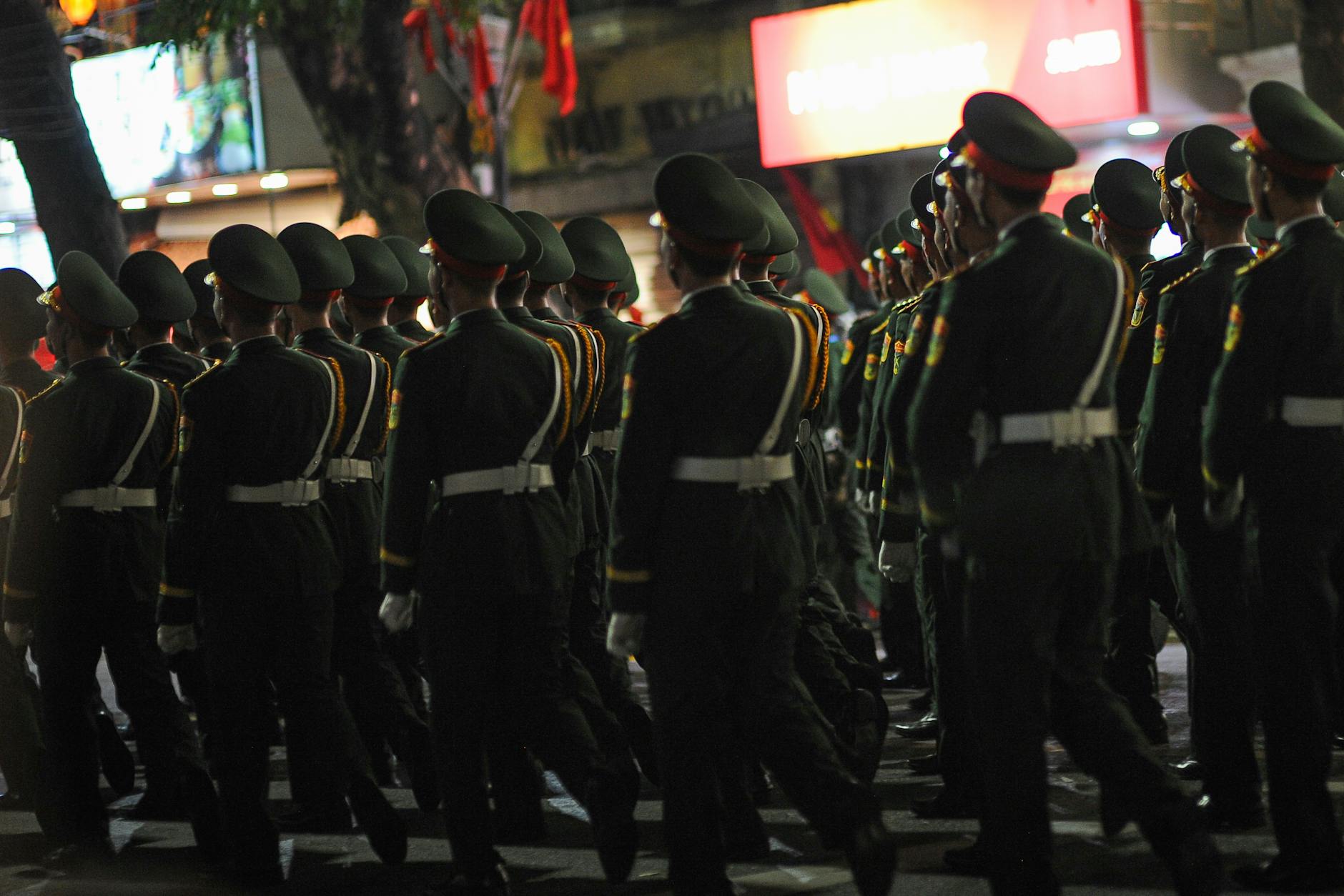
How Military Parades Are Planned and Executed: A Step-by-Step Guide
Planning a military parade is a complex undertaking, requiring meticulous attention to detail and coordination across multiple agencies. This guide-to-service-benefits-and-training/”>guide provides a step-by-step playbook for organizers and enthusiasts, covering everything from initial concept to post-event debrief.
Step 1: Define Scope, Objectives, and Stakeholders
Before you begin, clearly define the parade’s scope, objectives, and stakeholders. This includes identifying your target audience, the participating units, the date and location, and your primary objectives (e.g., show of respect, educational value, entertainment). Establish clear, measurable success metrics to track your progress.
Key Considerations:
- Audience: Demographics, interests, preferred platforms
- Units Involved: Participants, organizers, collaborators
- Date & Time: Precise timeline
- Location: Geographic scope, venue details
- Success Metrics: Trackable and meaningful measures (e.g., timeliness, safety, participant satisfaction)
Step 2: Permits, Legal Compliance, and Permissions
Secure all necessary permits and ensure legal compliance. This involves researching and obtaining permits from relevant authorities (city/county, law enforcement, military liaison), clarifying the scope of your event, and submitting applications well in advance. Address data protection and accessibility considerations from the outset.
Key Tasks:
- Obtain permits from relevant authorities
- Coordinate road closures and manage noise ordinances
- Secure public liability insurance
- Ensure data protection and accessibility compliance
Step 3: Route Design, Unit Lineup, and Timing
Design the parade route, unit lineup, and timing. Map the route, including start and finish points, staging areas, and spectator zones. Develop a detailed schedule that accounts for unit spacing and timing, allowing for flexibility in case of delays or withdrawals.
Key Elements:
- Route Mapping: Start/finish points, staging areas, spectator zones
- Unit Lineup: Order, spacing, timing windows
- Contingency Planning: Buffer time, reserve units, flexible spacing, communication plan
Step 4: Risk Assessment, Safety, and Crowd Management
Conduct a thorough risk assessment to identify potential hazards (e.g., crowd surges, medical incidents, weather disruptions) and develop strategies for mitigating those risks. Implement crowd management plans, including designated medical stations, security personnel, barriers, and evacuation routes. Conduct rehearsals of emergency procedures.
Key Actions:
- Formal risk assessment using a matrix
- Assign medical stations, security, barriers, and emergency access points
- Develop crowd management plans and evacuation routes
- Conduct drills and training for staff and volunteers
Step 5: Rehearsals and Drill Sequences
Schedule multiple rehearsals to ensure smooth execution. These rehearsals should focus on synchronizing movements with music, standardizing signals, and ensuring uniform appearance. Establish a clear command hierarchy and safety protocols.
Key Areas for Rehearsal:
- Music and tempo
- Signals and communication
- Uniforms and appearance
- Safety protocols and incident reporting
Step 6: Security, Access Control, and Emergency Procedures
Implement security screening at key entry points. Establish an Incident Command System (ICS) with clearly defined roles and responsibilities. Define access control points for participants and VIPs, and develop procedures for handling unauthorized entries.
Key Aspects:
- Security screening at entry points
- Incident Command System (ICS) implementation
- Access control for participants and VIPs
- Procedures for handling unauthorized entries
Step 7: Logistics: Equipment, Vehicles, and Uniforms
Plan the transport and staging of units, vehicles, and equipment. Ensure standardization of uniforms and insignia. Coordinate communications gear and power supplies, including backup equipment and contingency plans.
Key Logistics:
- Transportation planning and staging areas
- Uniform standardization and insignia management
- Communication gear and power supply coordination
Step 8: Volunteers, Staffing, and Training
Recruit and train volunteers for various roles (marshals, safety stewards, guides). Provide clear briefing materials, contact lists, and a defined chain of command. Ensure all volunteers receive adequate training on their roles and responsibilities.
Volunteer Roles:
- Marshals
- Safety stewards
- Guides
Step 9: Budgeting, Procurement, and Vendors
Create a detailed budget with contingency funds. Source approved vendors and ensure compliance with procurement rules. Avoid promotional content and maintain a clear audit trail.
Budgetary Considerations:
- Detailed budget with contingencies
- Approved vendor sourcing and compliance
- Avoidance of promotional content
Step 10: Contingency Planning and Weather
Monitor weather conditions and develop contingency plans for various scenarios (rain, extreme temperatures, wind). Establish clear cancellation and postponement criteria and a communication plan.
Contingency Planning:
- Weather monitoring and alerts
- Contingency routes and timings
- Cancellation/postponement criteria and communication plan
Step 11: On-the-Day Timeline, Checklists, and Post-Event Debrief
Create a detailed timeline for the event day, including checklists for each role. Conduct a post-event debrief to capture lessons learned and update standard operating procedures (SOPs).
Event Day Essentials:
- Minute-by-minute timeline
- Role-specific checklists
- Post-event debrief for lessons learned
Legal and Ethical Considerations
Respect veterans and participants, ensure inclusivity and accessibility, and comply with all relevant regulations. Always obtain consent before sharing personal information and ensure accurate attribution.
Comparison Table: Military Parade Planning vs Related Ceremonies
| Planning Area | Military Parade | Flag-Raising Ceremony | Civic Parade |
|---|---|---|---|
| Permits | Extensive permits required | Venue permits and public space approvals | Parade permits and street closures |
| Route Management | Defined route with secure corridors | Limited or no parade route | Public route through city streets |
| Rehearsals | Multiple full-dress rehearsals | Fewer rehearsals | Unit rehearsals as needed |
| Security | Integrated security plan with multiple agencies | Moderate security | Local police and security partners |
| Budget | Very large costs | Moderate costs | Costs vary |
| Timelines | Long lead time (12-18 months) | Weeks to months | Months lead time |
Pros and Cons of Different Planning Approaches
| Approach | Pros | Cons |
|---|---|---|
| Manual, paper-based planning | Simplicity | Error-prone, slow |
| Digital planning tools | Improved coordination, traceability | Requires training and maintenance |
| Volunteer-driven events | Cost-effective | Risk of staffing gaps |
| Pre-event rehearsals | Increase success | Require more time and resources |
Leave a Reply