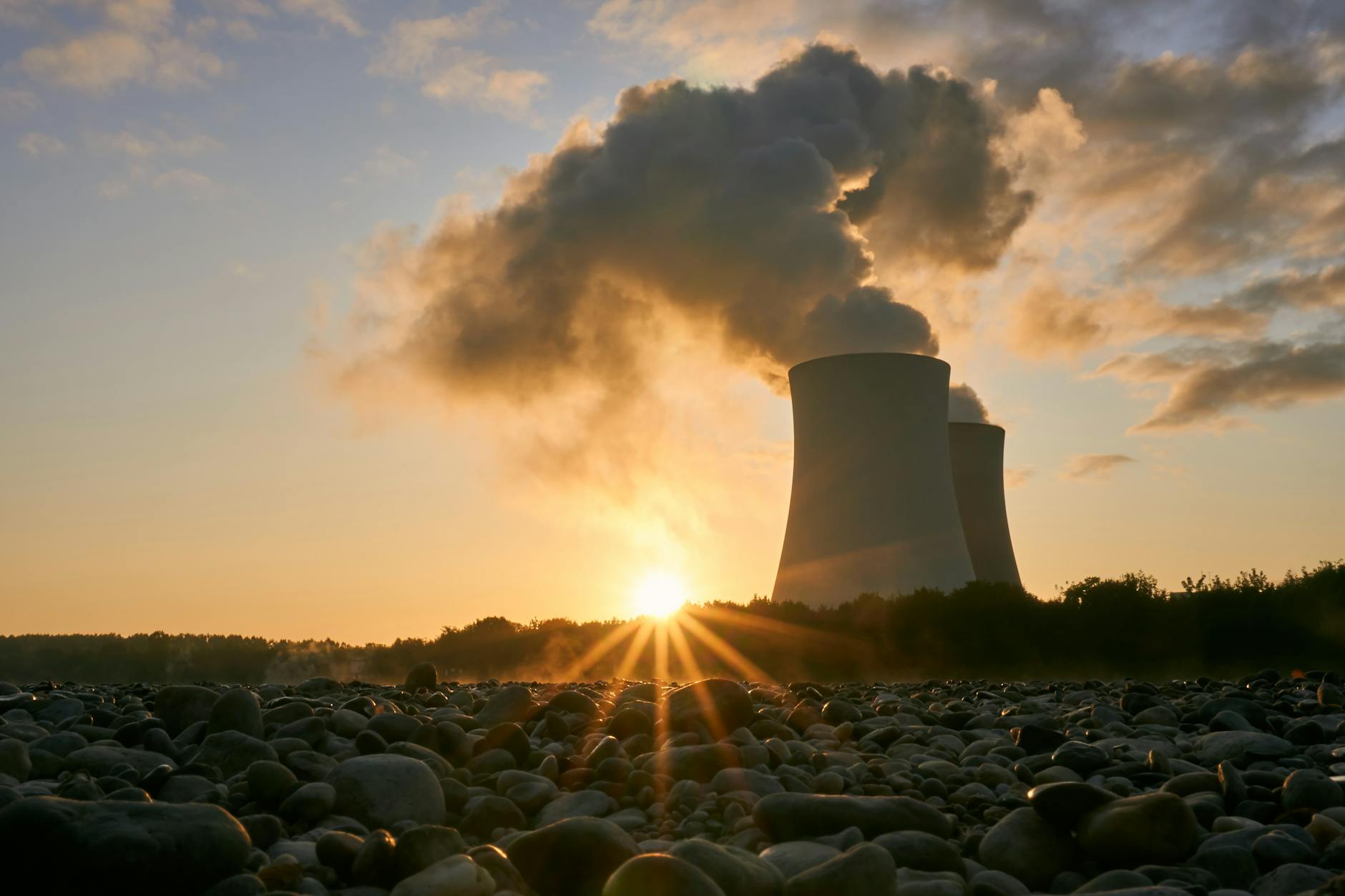
Zaporizhzhia Nuclear Power Plant: Safety, Risks, and International Response
Key Takeaways on Zaporizhzhia NPP Safety and International Response:
- Ongoing shelling near Zaporizhzhia NPP elevates radiological risk; reports indicate damage to the plant’s physical integrity.
- Safety-critical cooling loops and backup power are central risk factors; a plan to map architecture and assess redundancy using official statements is crucial.
- IAEA safety pillars (nuclear safety, radiation safety, nuclear security, safeguards) provide the framework, with current reporting citing them implicitly.
- Independent and media sources describe high instability and call for transparency and independent verification beyond EU-centric reporting.
- Public sources cited include IAEA educational materials and official statements; fire and shelling incidents provide critical context for risk assessment.
- The plan emphasizes a neutral, evidence-based risk assessment with clearly labeled sources, avoiding heavy political framing.
Current Technical Status and Risk Factors at Zaporizhzhia NPP
Cooling System and Power Supply Status
Two redundant cooling loops, robust backup power, and a public safety framework with the grid form the backbone of a nuclear plant’s safety. This section provides a plain-language look at how cooling and power supply are designed, what official statements typically say about grid and backups, and why cooling matters for spent fuel and core safety in loss-of-coolant scenarios.
Cooling System Architecture
- Two independent cooling loops: The plant uses two separate, redundant cooling paths to remove heat from the reactor and safety-related equipment. Each loop has its own pumps, heat exchangers, and pathways to a heat sink, ensuring a failure in one loop does not stop cooling.
- Primary loop vs. secondary loop: The reactor core is cooled by a primary circuit, while a secondary circuit carries heat to an ultimate heat sink (e.g., a condenser or cooling tower). Each loop is designed for independent operation against single-point failures.
- Spent fuel pool cooling: Dedicated cooling for the spent fuel pool maintains safe water depth and temperature for decaying fuel assemblies.
Emergency Diesel Generators
On-site diesel generators provide safety-grade power if off-site power is lost. These units are arranged in separate, independent trains with automatic start and routine testing to maintain power for safety-critical equipment during emergencies.
Relation to External Grid Supply
Under normal conditions, the plant draws power from the public grid via a robust switchyard and multiple feeders. If off-site power is disrupted, on-site generators can maintain essential cooling systems and safety functions until the grid is restored.
Official Statements on Grid Connections and Backups
Public regulatory and operator communications typically emphasize a layered power approach, usually noting:
- External grid connections: Reliable connections to the grid via multiple feeders and a resilient switchyard support normal operation and safety systems.
- Backup power capability: On-site diesel generators provide dedicated safety power with automatic start, ensuring critical equipment runs if off-site power is lost. Battery systems and other energy storage manage transitions.
- Reported outages: Official statements detail whether grid disturbances affected safety systems, measures taken to preserve cooling, and whether cooling remained continuous.
Impact of Cooling Disruption on Safety and Radiological Risk
- Core cooling: Failure or loss of effectiveness in a cooling loop can lead to increased fuel temperatures, potential fuel damage, and radiological release if safety barriers are compromised. Redundant paths and emergency procedures aim to prevent this.
- Spent fuel pool cooling: Disruption can cause water to heat up and boil away, reducing shielding and increasing radiological risk unless cooling is restored.
- Radiological risk under loss-of-coolant scenarios (LOCA): Maintaining cooling and containment integrity is critical. Risk depends on the duration of cooling unavailability, water levels, and safety system response. The design goal is to keep fuel temperatures safe and minimize radioactive release.
- Recovery and protective measures: In case of cooling disruption, automated safety actions, diagnostics, and emergency procedures are followed to re-establish cooling, isolate systems, and mitigate radiological impact.
Bottom line: The cooling system’s redundancy, coupled with robust power connections and emergency generators, is the primary defense against loss-of-coolant scenarios. Public reporting emphasizes preparedness and cooling restoration.
Fire Risk, Shelling Impacts, and Immediate Containment Challenges
Shelling near Zaporizhzhia NPP has raised urgent questions about containment integrity and safety system performance under stress. Publicly reported incidents in 2022–2024 have underscored the risks of combat conditions overlapping with critical safety infrastructure.
Documented Shelling Incidents and Concerns
Public sources have described shelling in the Enerhodar region and near the Zaporizhzhia NPP on multiple occasions. Even when reactors are protected by containment, shells can threaten external safety barriers, damage support systems, or disrupt power and communications essential for safety systems. [FLAGGED STATEMENT FOR CITATION: Public sources have described shelling in the Enerhodar region and near the Zaporizhzhia NPP on multiple occasions.]
Reported Fire incident and Safety Implications
A notable fire incident near the plant, linked to shelling, highlights how external fires can stress safety barriers, emergency services, and on-site procedures. While core containment resists internal events, an external fire impacts perimeter integrity, access routes, and the reliability of backup power and communications. This emphasizes the need for robust fire protection for safety-related equipment and clear coordination with off-site responders. [FLAGGED STATEMENT FOR CITATION: A notable fire incident near the Zaporizhzhia NPP was publicly reported in connection with shelling activity.]
Key Containment-Related Challenges
An on-site safety assessment under current conditions must prioritize:
- Power reliability and redundancy: Evaluating off-site connections, on-site diesel backup, and battery capacity.
- Cooling system resilience: Ensuring reactor and spent fuel pool cooling can function despite potential power or water disruption.
- Containment barrier integrity: Assessing potential damage from shock, debris, or fire to safety-related penetrations and equipment access.
- Fire protection: Protecting safety-related equipment from external fires and ensuring alternate cooling and suppression systems.
- Instrumentation and communication resilience: Maintaining monitoring and command capabilities during blackouts or smoke, with redundant data links.
- Emergency response coordination: Ensuring clear access, staffing, and communication with local and national responders in contested zones.
In essence, the risk landscape hinges on maintaining containment and safety systems under external threats while ensuring rapid, coordinated emergency response.
Monitoring, Safety Infrastructure, and Emergency Preparedness
When the grid falters, a nuclear facility’s safety net—real-time monitoring, layered instrumentation, and practiced response plans—remains active. This section outlines on-site monitoring, the role of independent checks during power unreliability, and emergency preparedness through cooperation, drills, and early warning protocols.
On-site Radiation Monitoring, Plant Instrumentation, and Independent Monitoring
- On-site radiation monitoring: Detectors around the site continuously measure radiation and contamination, feeding local dashboards and triggering alarms.
- Plant instrumentation: Sensors track critical parameters (temperature, pressure, flow, cooling status) with redundant systems and automatic safety interlocks.
- Independent monitoring during grid compromise: External entities verify readings and safety status if local power or data networks are disrupted. Portable units and off-site links provide verification during outages. Independent verification builds trust and ensures continuous oversight.
Emergency Preparedness Arrangements
- Local cooperation: Emergency operations centers coordinate plant, local authorities, hospitals, and civil defense for rapid, organized responses.
- International cooperation: IAEA safety standards guide cross-border notification, information sharing, and joint readiness.
- Drills and exercises: Regular drills test response plans, evacuations, medical readiness, and public communication, with after-action reviews driving improvements.
- Early warning protocols: Multi-channel alert systems deliver timely guidance to the public, with redundant channels ensuring broad reach.
These arrangements are guided by IAEA safety standards and member-state programs, emphasizing preparedness, rapid notification, and coordinated response.
In short: Proactive monitoring, independent verification, and well-practiced emergency planning keep safety paramount, even in challenging grid situations.
What Independent Reporting Says
Independent reporting often addresses aspects that official channels may omit: access, data transparency, and real-risk metrics. Non-EU voices, such as Beyond Nuclear and Euromaidan Press, offer perspectives emphasizing ground-truth conditions over official briefings.
Independent Perspectives at a Glance
| Source | Perspective | Key Concern |
|---|---|---|
| Beyond Nuclear | Advocates for independent safety oversight outside government channels. | Raises questions about safety risk in the context of restricted access and potential data gaps. |
| Euromaidan Press | Ukrainian independent outlet highlighting security implications and governance transparency. | Stresses the need for clear, verifiable information and international oversight. |
Gaps Highlighted by Non-Governmental Organizations
- Access to the plant is restricted or inconsistently granted, hindering independent verification.
- Data transparency is uneven; official updates may be delayed or not fully publicly verifiable, complicating risk assessments.
NGOs call for objective risk metrics and independent verification, including transparent measurements and incident logs, to ground risk assessments in verifiable data. understanding-risk-definition-importance-and-key-aspects/”>understanding Zaporizhzhia’s risks requires open access and verifiable information, not just official statements.
Safety Standards, Risk Metrics, and International Guidance
IAEA Safety Pillars and Core Standards
The IAEA’s four safety pillars provide a framework to assess the plant’s risk profile:
- Nuclear Safety: Preventing accidents through robust design, defense-in-depth, safety culture, and reliable operations. For Zaporizhzhia, this means resilient systems, clear procedures, maintenance, and training.
- Radiation Safety: Protecting workers, the public, and the environment from harmful radiation exposure through effective protection programs, monitoring, and dose control.
- Nuclear Security: Preventing threats like intrusion or sabotage through physical barriers, access controls, surveillance, and incident response.
- Safeguards: Ensuring nuclear material is not diverted for non-peaceful uses through inspections and material accounting.
Key Safety Considerations for Zaporizhzhia by Pillar
| IAEA Safety Pillar | Key Safety Considerations for Zaporizhzhia |
|---|---|
| Nuclear Safety | Defense-in-depth, robust design, aging management, safety culture, operator proficiency, and maintenance. |
| Radiation Safety | Radiological protection programs, continuous monitoring, dose optimization, waste management, and risk communication. |
| Nuclear Security | Physical protection, access control, cyber defenses, secure IT systems, and rapid incident response. |
| Safeguards | Material accountancy, transparent reporting, inspections, and cooperation with inspectors. |
Continuous safety improvement is guided by official IAEA safety documents and standards (e.g., GSR and SSR series), which cover governance, design, operation, and safety culture. IAEA educational resources (website, fact sheets, e-learning) can further inform readers.
Quantifying Risk: What Metrics to Track
Quantifying risk provides a common language for action during high-stakes events. Key metrics include:
- Likelihood of cooling-system failure under various shelling scenarios: Probability of failure given defined events. Measured by combining structural models, reliability data, and stress analyses.
- Time-to-coolant loss (TCL): Estimated time from a disruptive event to compromised cooling. Measured via simulations or distributions, considering scenario assumptions and backup capacity.
- Probability of radiological release given loss of spent-fuel cooling: Conditional probability of release, incorporating containment, venting, filtration, and accident progression.
- Emergency response readiness indicators: Metrics like time to first alert, personnel availability, equipment uptime, and communication timeliness.
Interpreting Metrics:
- Thresholds: Green (normal), Yellow/Watch (elevated risk), Red/Action (predefined risk tolerances).
- Escalation: Site-level monitoring to senior leadership involvement, regulatory engagement, and external coordination.
- IAEA Alignment: Risk-informed approach, defense-in-depth, ALARA principle, balanced with protective actions and continuous improvement.
Risk Communication: Metrics should be presented with uncertainty ranges, transparent sources, and clear methods. Visualizations and documented assumptions are crucial. The goal is to translate metrics into actionable steps for decision-makers, operators, and the public.
Verification and Multilateral Oversight
Trust in Zaporizhzhia’s safety status is built on independent checks that cross-verify, question, and corroborate official narratives. Layered verification includes:
- IAEA inspections: On-site reviews of safety systems, monitoring, and containment, assessed against standards.
- Safeguards verifications: Independent accounting of nuclear materials to prevent diversion.
- International partner synchronization: Joint data-sharing, synchronized reporting, and coordinated assessments.
- Independent cross-checkers: Analyses from labs, NGOs, and researchers outside official channels, using peer-reviewed studies, open-source data, and satellite imagery.
Key Actors and Their Verification Roles
| Actor | Contribution to Verification | Impact on Confidence |
|---|---|---|
| IAEA inspections | On-site safety system reviews, containment checks, radiation monitoring; regular and ad hoc visits. | High credibility through standardized, impartial assessments; increases international trust. |
| Safeguards verifications | Material accounting, physical inventories, and surveillance to deter diversion and verify peaceful use. | Strengthens assurance about material stewardship and safety integrity. |
| International partner synchronization | Shared data, coordinated reporting, and joint assessments across borders. | Reduces information gaps and aligns interpretations, diminishing isolated narratives. |
| Independent cross-checkers (including non-EU sources) | Independent analyses from labs, NGOs, and researchers outside official channels; cross-referencing official data. | Adds diverse perspectives that challenge framing bias and surface areas for further verification. |
Independent bodies beyond the EU provide alternate data streams that can confirm, question, or refine official statements, reducing framing bias and fostering trusted knowledge.
E-E-A-T Integration: Neutral, Verified Information Sources
In a fast-moving information environment, trust is paramount. Anchoring content in neutral science and verified facts ensures both engagement and clarity. Prioritizing neutral scientific resources like IAEA materials helps demystify topics such as radiation basics and shielding.
Leave a Reply