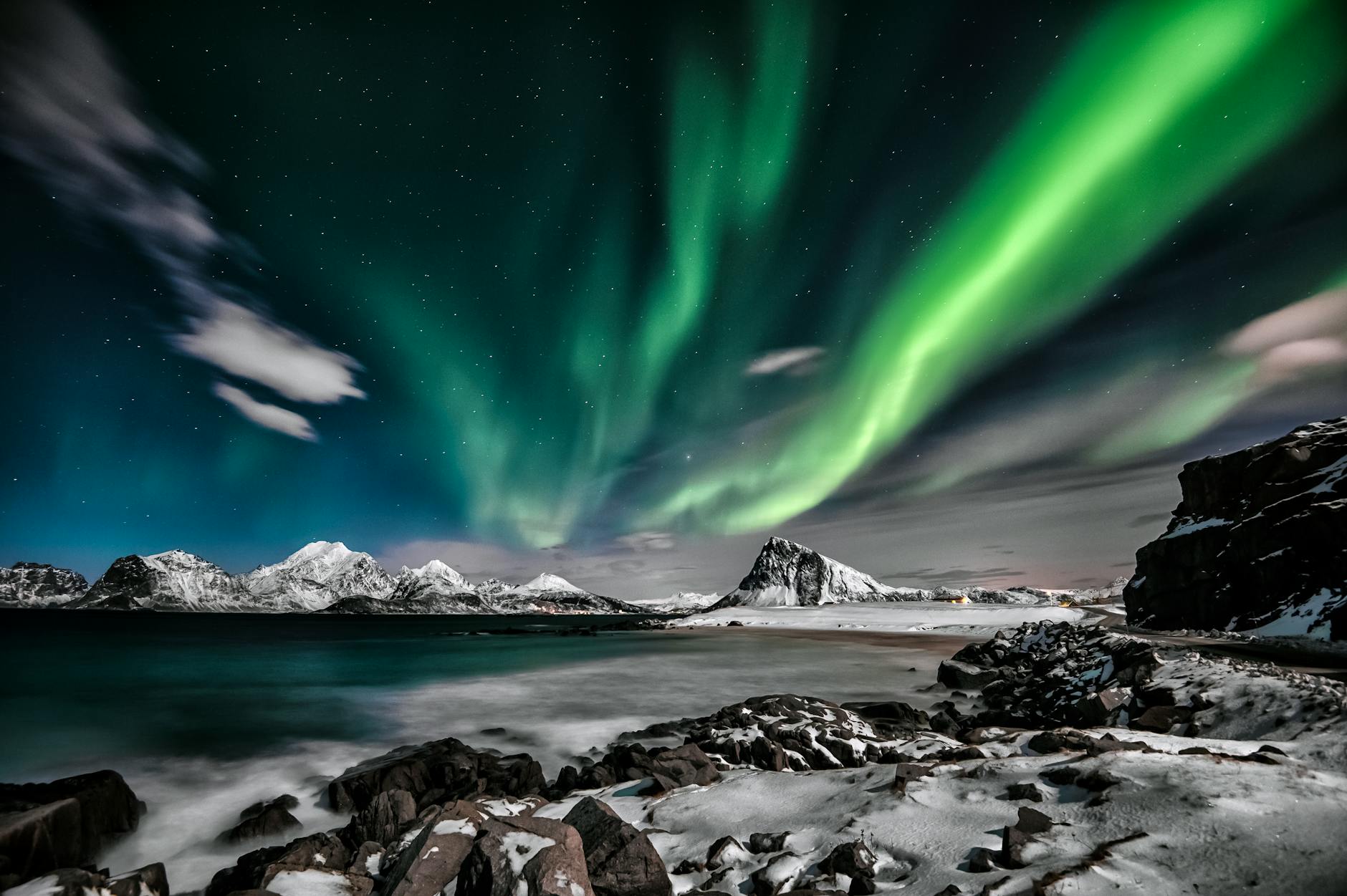
How Geomagnetic Storms Trigger the Aurora Borealis: Science, Forecasts, and the Best Viewing Tips
The mesmerizing dance of the aurora borealis, or northern Lights, is a celestial spectacle that captivates observers worldwide. While often seen as magical, this phenomenon is rooted in powerful solar activity and Earth’s protective magnetic field. understanding the science behind geomagnetic storms and how to forecast aurora activity can transform a fleeting glimpse into a planned adventure. This guide breaks down the essential science, forecasting tools, and practical tips for aurora hunters.
The Science Behind the Glow: From Sun to Sky
Auroras arise from the interaction between charged particles from the Sun and Earth’s upper atmosphere. When the Sun emits a stream of charged particles, known as the solar wind, these particles travel through space, carrying embedded magnetic fields. If Earth’s magnetosphere encounters a southward-pointing interplanetary magnetic field (IMF), it can allow energy to transfer into our planet’s magnetic shield. This energy strengthens the ring current around Earth and accelerates charged particles towards the polar regions of our ionosphere. As these energetic particles collide with atmospheric gases like oxygen and nitrogen at high altitudes, they excite these atoms, causing them to emit light – the aurora.
Colors and What They Mean
The captivating colors of the aurora are determined by the altitude of the collision and the type of gas involved:
- Green: The most common aurora color, produced by excited oxygen atoms at altitudes of about 100–150 km.
- Red: Higher-altitude oxygen emissions (above 200 km) can result in beautiful red hues.
- Purple/Blue: Interactions with nitrogen molecules at various altitudes can produce shades of purple and blue.
During geomagnetic storms, the area where these collisions are most likely, known as the auroral oval, expands towards lower latitudes. This expansion increases the chances of aurora visibility at mid-latitudes, though local conditions like clear skies and minimal light pollution are still crucial factors.
Forecasting the Glow: Predicting Aurora Activity
Predicting aurora activity is a data-driven process that translates solar events into actionable forecasts for enthusiasts. Scientists monitor various parameters to assess the potential for geomagnetic storms and subsequent auroral displays.
Key Forecasting Metrics
Several key terms and indices are vital for understanding aurora forecasts:
- Solar Wind Speed and Density: These indicate how fast and how concentrated the charged particles are that are heading towards Earth, directly influencing the energy transfer.
- Interplanetary Magnetic Field (IMF) Bz: A southward orientation (Bz < 0) is crucial for energy to enter Earth's magnetosphere, making it a primary indicator of potential storm activity.
- Kp Index: This is a global measure of geomagnetic activity. A Kp index of 5 or higher often indicates that auroras may be visible at mid-latitudes, while Kp 7 or higher can extend visibility even farther south.
- Dst Index: This index measures the strength of the ring current, a major component of geomagnetic storms. Larger disturbances typically correlate with stronger storms.
Forecasting models blend physics-based simulations with statistical methods. Satellites provide real-time data on solar wind conditions, while ground-based observatories help measure geomagnetic activity. However, challenges remain due to uncertainties in solar wind forecasting, measurement gaps, and terrestrial weather-101-current-conditions-seasonal-trends-and-severe-weather-preparedness/”>weather conditions that can obscure the view.
Tools and Data for Aurora Enthusiasts
A variety of tools and data sources can help aurora watchers plan their expeditions:
Key Resources and Tools
- NOAA SWPC (Space Weather Prediction Center): Provides near-real-time forecasts, including three-hour Kp predictions and alerts. Checking hourly during potential storm windows is recommended.
- Aurora Forecast Maps (e.g., Ovation): These tools offer improved accuracy for spatial detail, helping to locate the strongest viewing sectors and time activity.
- Real-time Solar Wind Data (ACE/DSCOVR): Offers insights into immediate onset possibilities, best used for short-notice viewing opportunities.
- Forecast Apps and Alerts: Many apps track Kp indices and display aurora oval maps, allowing users to set alerts for specific Kp thresholds or expanding ovals.
Ground-Based Data
Ground-based data, such as from the 2012 Geomagnetic Repeat Station Data release (Fremont, NE; Hereford, TX; Del Rio, TX), support regional geomagnetic measurements and help in validating forecasting models by providing historical benchmarks. While some research explores potential correlations between geomagnetic storms and earthquakes using statistical tests on Dst data, this is a separate field of study and should be interpreted with caution.
Planning Your Aurora Viewing Expedition
Successful aurora viewing requires more than just good forecasts; it involves strategic planning and understanding environmental factors.
Best Viewing Practices
- Timing: The best viewing is typically after sunset, with peak activity often occurring around local midnight, especially during periods of higher geomagnetic activity.
- Location: Choose dark-sky sites far from city lights. A wide northern horizon with minimal obstructions is ideal.
- Preparation: Dress warmly for cold conditions and be prepared for a potentially long waiting period. Patience is often key.
- Multiple Nights: Plan for multiple nights of viewing, as even strong storms can be elusive or require repeated attempts for a satisfactory sighting.
Environmental Factors
Even with a perfect forecast, several factors can hinder visibility:
- Cloud Cover: Clouds are the most significant impediment to aurora viewing. Always check local weather forecasts.
- Moon Phase: A full moon can significantly wash out fainter auroral displays. Viewing is often best during the new moon or crescent moon phases.
- Light Pollution: Artificial lights from urban areas scatter atmospheric light and obscure the aurora. Minimizing light pollution is crucial.
Conclusion: A Spectacle of Science
The aurora borealis is a stunning reminder of the dynamic relationship between the Sun and Earth. By understanding the science of geomagnetic storms, utilizing available forecasting tools, and employing smart viewing strategies, aurora enthusiasts can significantly increase their chances of witnessing this incredible natural phenomenon. Remember that while forecasts improve, aurora viewing often involves an element of chance, making each successful sighting a truly rewarding experience.
Leave a Reply