Data Centers: Definition, Types, Trends, and Practical Deployment Guide
Data centers are the backbone of our digital world, housing the critical IT infrastructure that powers everything from our daily online activities to large-scale business operations. Understanding what they are, their different forms, and how they are deployed is crucial in today’s data-driven landscape.
What is a Data comprehensive-overview-of-gpus-ai-and-data-center-technologies/”>center?
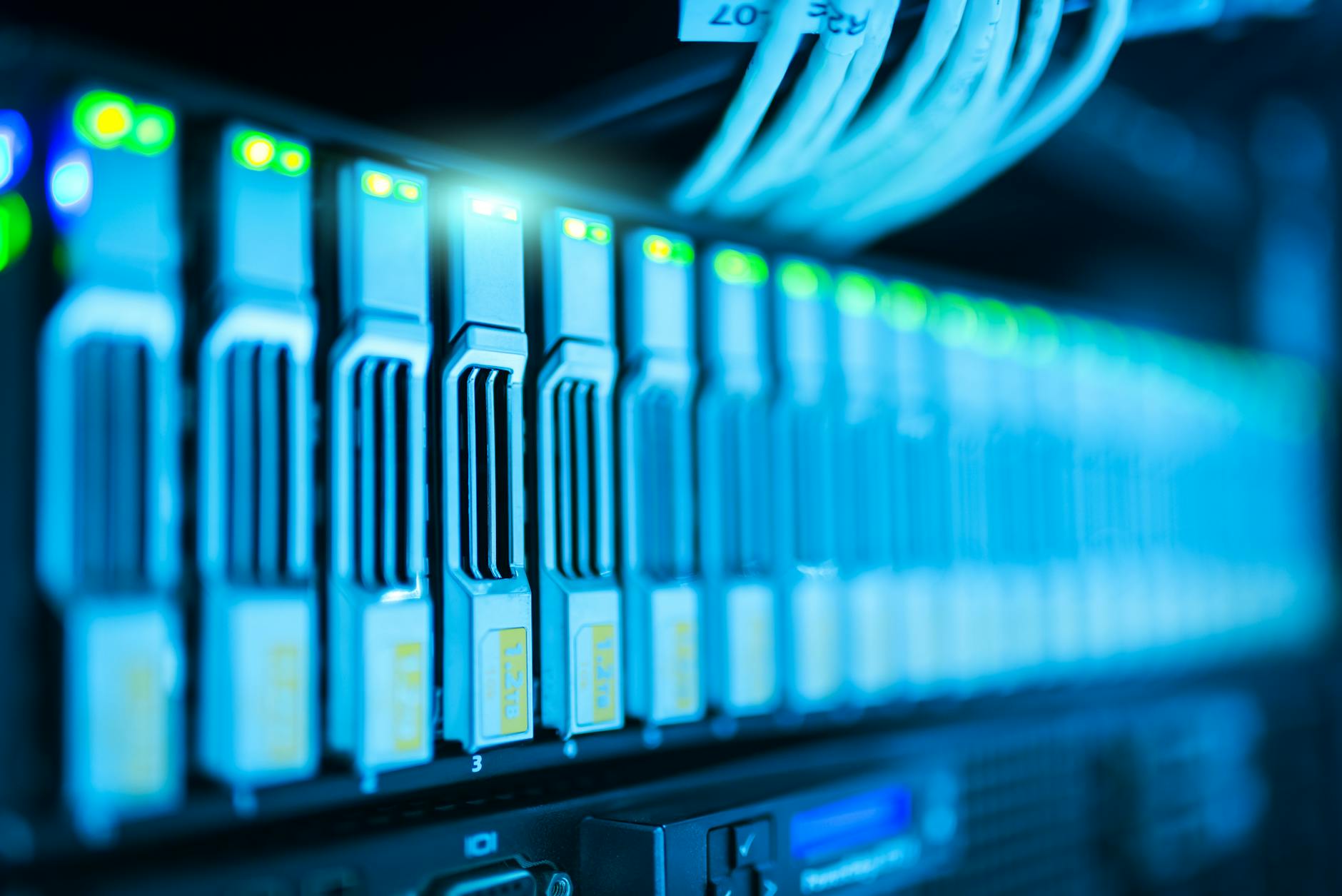
A data center is a dedicated facility designed to house IT equipment, including servers, storage systems, and networking devices. These facilities are equipped with essential infrastructure such as reliable power, advanced cooling systems, robust security measures, and high-speed network connectivity, all of which are vital for supporting business workloads and applications.
Categories of Data Centers
Data centers can be broadly categorized based on their ownership, scale, and deployment patterns:
- Enterprise-owned data centers: Purpose-built, company-owned sites aligned with internal IT and security policies.
- Colocation facilities: Shared data centers where tenants rent space, power, and cooling, benefiting from scale and reliability without direct ownership.
- Hyperscale campuses: Massive facilities built and operated by major cloud providers, engineered for extreme speed, reliability, and energy efficiency.
- Edge data centers: Small, distributed facilities located closer to end-users to minimize latency for localized data processing.
Core Components of a Data Center
Regardless of their type, data centers share several core components:
- IT Equipment: Servers, storage arrays, and networking hardware.
- Power Infrastructure: Utility feeds, Uninterruptible Power Supplies (UPS), and backup generators.
- Cooling Systems: Computer Room Air Conditioners (CRACs), air handlers, and containment strategies to manage heat.
- Security: Physical access controls and cybersecurity measures.
- Monitoring and Management Systems: Software for overseeing operations and performance.
- Cabling: High-density, structured cabling for network connectivity.
Historical Context and Modern Trends
Early data centers were often custom-designed with features like raised floors. Modern facilities, however, emphasize modularity, scalability, energy efficiency, and rapid provisioning to adapt to evolving IT demands.
Data Center Growth and Demand
The exponential growth in data volume is a primary driver for data center expansion. Data volume is projected to reach 163 zettabytes by 2025, underscoring the sustained demand for diverse data center types and increased capacity.
The age of existing data centers also highlights the need for modernization. IDC cites an average data center age of 9 years, while Gartner notes that centers older than 7 years are often considered obsolete, indicating a significant need for upgrades and new builds.
Types of Data Centers in Detail
Enterprise Data Centers
Enterprise data centers are custom-built, company-owned facilities tailored to specific internal IT and security requirements. They typically range from 1-20 MW per site and involve significant capital investment and longer construction timelines. Key considerations include deep integration with legacy systems, stringent compliance, and in-house facilities management. Virginia’s substantial data center inventory (51 million square feet and over 2,100 MW of capacity as of Q1 2023) influences enterprise capacity and power planning.
Colocation / Multi-Tenant Facilities
Colocation facilities offer a powered, climate-controlled environment within a shared data center. Tenants benefit from scale, reliability, and on-site support without the burden of ownership. These facilities are operated by a provider, with tenants sharing power, cooling, and network resources. They typically range from a few to tens of MW per site and offer faster deployment and predictable operating costs. The growing data volume (163 zettabytes by 2025) drives demand for these scalable, standardized facilities.
Hyperscale Data Centers
Hyperscale data centers are the production lines of cloud services, built for speed, reliability, and energy efficiency at a planetary scale. Operated by major cloud providers, they utilize automation, standardization, and modular designs for rapid deployment and scaling. These sites can range from 20-100+ MW and are part of campus networks for global reach. Advantages include economies of scale, rapid provisioning, and optimized energy efficiency. Regional demand growth supports these expansive deployments.
Edge Data Centers
Edge data centers are smaller, distributed facilities strategically placed in cities and connectivity hubs to bring compute and storage closer to end-users, minimizing latency. Ownership can vary, and they typically have smaller footprints (0.5-2+ MW). Benefits include ultra-low latency and localized data processing, though they can present higher management complexity and per-unit costs. Edge facilities complement centralized capacity by supporting latency-sensitive workloads and expanding network reach.
Data Center Economics and Deployment Considerations
The choice of data center impacts economics and deployment strategies significantly. Key differentiating factors include:
Ownership and Control
- Enterprise: Full asset ownership, emphasis on customization and security.
- Colocation: Shared facility ownership, faster market entry, reduced upfront capital.
- Hyperscale: Operator-managed at scale, centralized ownership of scale-ready assets.
- Edge: Often less direct enterprise asset ownership, distributed and complex maintenance.
Scale, Automation, and Latency
- Hyperscale: Focuses on scale, automation, and efficiency with modular, high-density campuses.
- Edge: Optimizes for latency and distribution with highly distributed micro-sites, often at a higher relative cost per capacity.
Power and Cooling Choices
Cooling strategies, density targets, and containment are crucial for managing PUE, reliability, and operating costs across all data center types. Hyperscale utilizes high-density, scalable cooling, while edge deployments require localized solutions tailored to site constraints.
Capex vs Opex Dynamics
- Enterprise: Capex-heavy with long-term ownership and depreciation.
- Colocation: Opex-like model with predictable pricing and lower upfront capital.
- Hyperscale: Opex-driven operations with service-based models and economies of scale.
- Edge: Tends toward Opex via managed services or pay-as-you-go models.
Deployment Velocity
- Colocation and Edge: Typically enable quicker deployment than bespoke enterprise builds.
- Hyperscale: Accelerates expansion through modular, scalable design.
Regional Planning Implications
Site selection is guided by regional demand, fiber reach, energy pricing, workforce, and regulatory environments. Virginia’s extensive data center footprint exemplifies how strong regional infrastructure shapes site selection, fiber reach, and energy strategies.
Pros and Cons of Data Centers
Pros
- High reliability and uptime
- Scalable capacity for growing workloads
- Access to robust connectivity
- Opportunities for energy efficiency improvements
Cons
- High upfront capital expenditure
- Ongoing operating costs (power, cooling, maintenance)
- Regulatory and permitting hurdles
- Potential environmental impact concerns
Operational Reality Note: Modernization is key to improving efficiency and reducing costs. With an average data center age of around 9 years and many centers considered obsolete after 7 years, refresh cycles are essential.
Leave a Reply