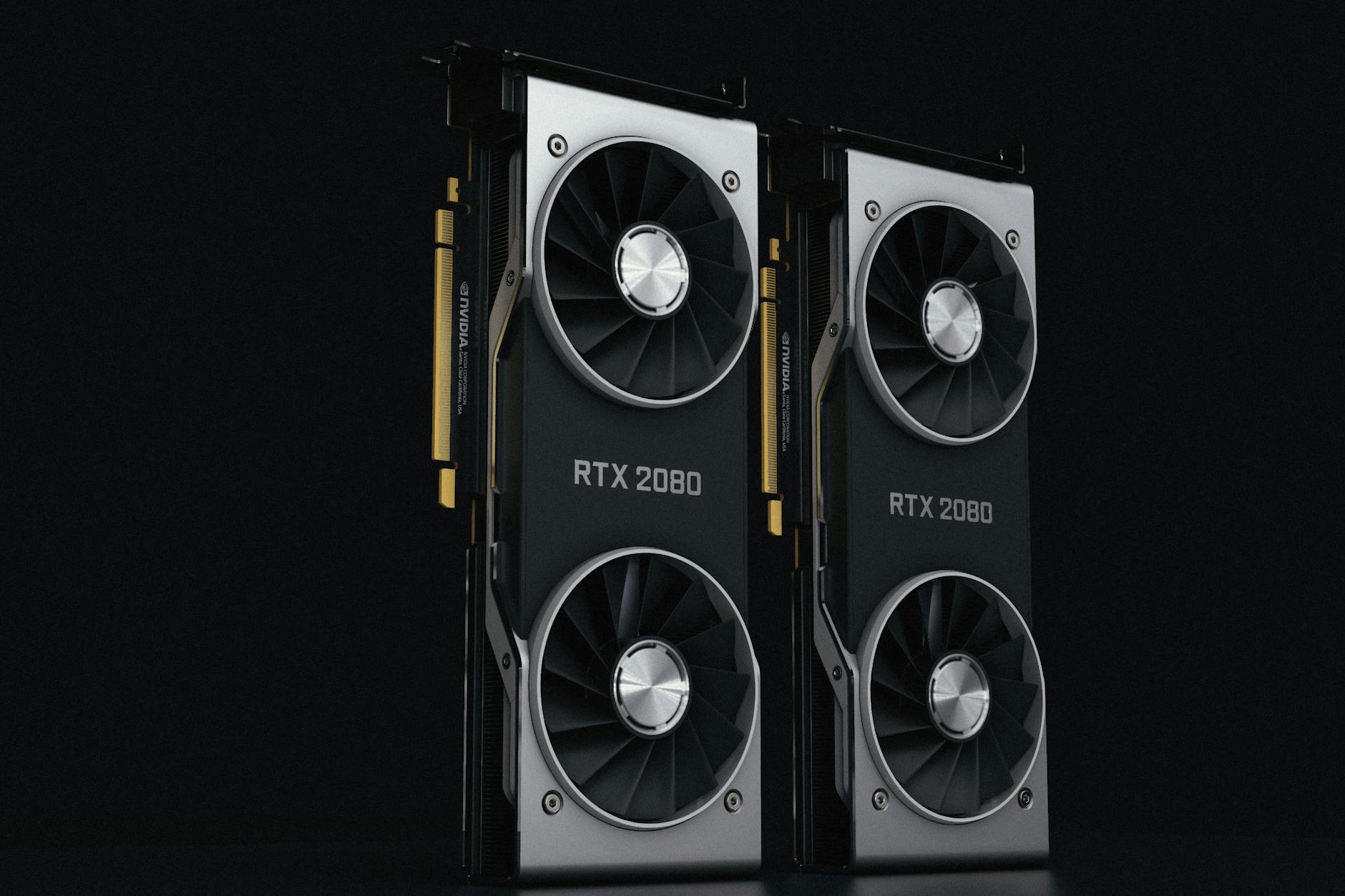
NVIDIA: A Comprehensive Overview of GPUs, AI, and Data Center Technologies
nvidia at a Glance: Core Mission and Business
NVIDIA’s core mission is to drive accelerated computing across diverse sectors including gaming, AI, data centers, and autonomous systems. Its influence extends to shaping how modern software operates at scale. Key revenue streams originate from GeForce RTX gaming GPUs, data-center GPUs (A100/H100 series), and a comprehensive software stack (CUDA, libraries, and platforms) designed to accelerate development and deployment.
NVIDIA uniquely blends hardware, software, and services to power AI training, inference, simulation, and real-time graphics. This cohesive ecosystem minimizes integration complexities for developers and enterprises alike.
NVIDIA Product Families
- GeForce/RTX: Consumer-focused gaming and creator workloads featuring real-time ray tracing and DLSS.
- Data Center GPUs (A-series, H100, and successors): Powering AI training, high-performance computing (HPC), and large-scale inference.
- CUDA and CUDA-X: A comprehensive developer toolkit and libraries for accelerating GPU workloads.
- NGC: A container registry with optimized AI software stacks for rapid model deployment.
- Omniverse: A 3D design, simulation, and collaboration platform for virtual worlds and digital twins.
- DRIVE: Autonomous driving hardware and software for Advanced Driver-Assistance Systems (ADAS) and self-driving development.
- Jetson: Edge AI platform for robotics, edge devices, and embedded AI applications.
These components form a complete end-to-end stack, extending from edge and creator workloads to robust enterprise AI platforms.
Getting Started
For Individuals
- Choose a GeForce RTX GPU.
- Install the latest NVIDIA drivers and software.
- Explore the CUDA Toolkit and developer resources.
- Join the NVIDIA developer community.
For Teams and Enterprises
- Map workloads and success metrics.
- Evaluate NVIDIA AI software (CUDA, cuDNN, TensorRT).
- Explore NGC and Omniverse offerings.
Pricing and Procurement
Pricing varies regionally. NVIDIA offers direct sales channels and authorized partners, providing region-specific pricing, local warranties, and streamlined purchasing options.
Use Cases Across Industries
- AI at Scale: Training massive models and delivering real-time inference.
- Gaming, Content Creation: Immersive experiences on mainstream hardware.
- Automotive and Robotics: Simulation, perception, and autonomous vehicle development (DRIVE and Jetson).
- Industrial Design and Simulation: Digital twins and Omniverse-enabled collaboration.
- Healthcare Imaging and Scientific Computing: Accelerated analytics and HPC workloads.
Benchmarks and Real-World Performance
Understanding real-world performance requires analyzing benchmarks thoughtfully. Consider factors like FP32/FP16 throughput, AI training speed, ray-tracing FPS, and memory bandwidth. Consult both official benchmarks and independent reviews for a balanced perspective. Remember that consistent software, drivers, and hardware setups are crucial for accurate comparisons. For enterprise planning, pilot projects are essential to assess total cost of ownership (TCO), energy consumption, and deployment complexity.
NVIDIA Tools: CUDA, NGC, Omniverse, DRIVE, and Jetson
- CUDA: The core GPU programming framework. Nsight and profiling tools aid performance optimization.
- NGC: Provides ready-to-run containers and pretrained models for accelerated AI/ML deployment.
- Omniverse: Enables collaborative, real-time 3D simulation at scale.
- DRIVE and Jetson: Power autonomous vehicle development and edge AI applications, respectively.
Extensive official documentation, tutorials, and active developer communities support rapid learning and problem-solving.
NVIDIA in Context: Industry Comparisons
| Category | NVIDIA | AMD | Intel |
|---|---|---|---|
| Consumer GPUs | Leads in performance and AI tooling; broad ecosystem. | Strong price-to-performance; competitive gaming. | Niche in gaming; smaller market share. |
| Data-center accelerators | Leads with A100/H100; mature AI libraries. | Competitive price/performance; ROCm support. | Xe accelerators; open ecosystem via oneAPI. |
| Software ecosystems | CUDA is the industry standard. | ROCm and oneAPI; smaller ecosystem than CUDA. | OneAPI; ecosystem still maturing. |
| Performance | Often delivers leading performance. | Competitive performance; improving with ROCm. | Performance varies by workload. |
| Power efficiency | High efficiency in modern architectures. | Good efficiency; gains with newer architectures. | Efficiency depends on accelerator. |
| Ecosystem maturity | Most mature ecosystem. | Growing ROCm and oneAPI maturity. | OneAPI-centric strategy; ecosystem maturing. |
| Use-case guidance | For AI-heavy workloads, NVIDIA often provides the most mature tooling and performance. | For open standards or cost-sensitive projects, AMD hardware with ROCm/oneAPI can be compelling. | For open ecosystems or budget-conscious projects, Intel options with oneAPI and Xe accelerators can be viable. |
Pros and Cons
Pros
- Industry-leading AI acceleration
- Comprehensive CUDA-based software stack
- Mature developer ecosystem
- Broad hardware availability
- Powerful data-center solutions
- Strong tooling
- Broad partner ecosystem
- Regular software updates
- Extensive documentation and community support
Cons
- Premium pricing and potential supply constraints
- Enterprise deployments can be complex
- Some offerings are tightly integrated with NVIDIA hardware
- Energy consumption considerations
- Competition from AMD/Intel in certain segments
Leave a Reply